
Concept of Gastrointestinal and Liver Center

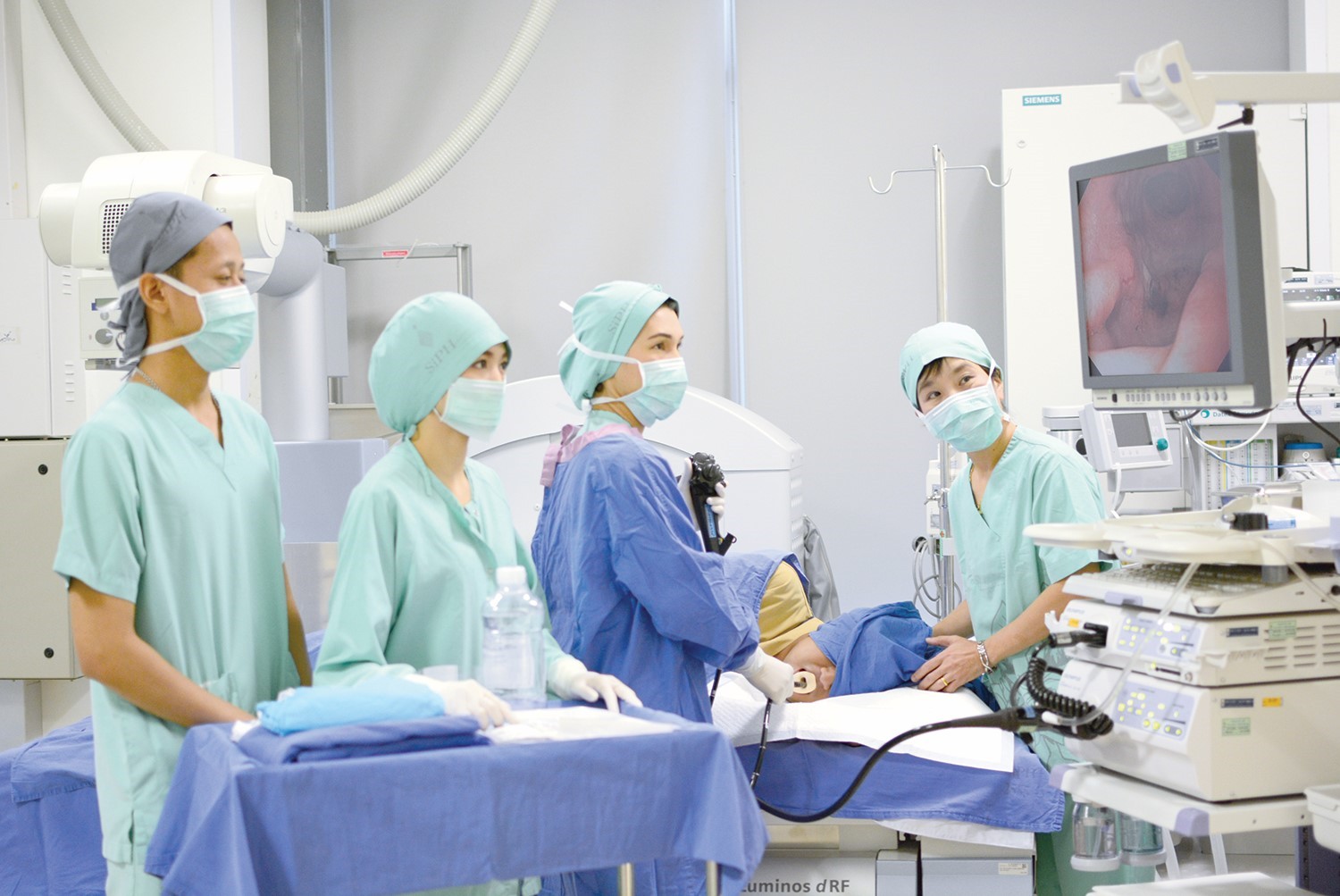
The Gastrointestinal and Liver Center provides comprehensive, integrated care for all digestive and liver diseases. Our multidisciplinary team consisting of gastroenterologists, hepatologists, surgeons, anesthesiologists, and other related specialists such as radiologists and oncologists collaborates to design customized treatment plans tailored to each individual patient.

The center is equipped with advanced medical technologies for both diagnosis and treatment, including state-of-the-art endoscopic procedures and surgical interventions. Patients receive close, attentive monitoring from our highly trained specialized medical staff to maximize safety, minimize complications, and promote a rapid recovery.

The Gastrointestinal and Liver Center provides comprehensive, integrated care for all digestive and liver diseases. Our multidisciplinary team consisting of gastroenterologists, hepatologists, surgeons, anesthesiologists, and other related specialists such as radiologists and oncologists collaborates to design customized treatment plans tailored to each individual patient.

The center is equipped with advanced medical technologies for both diagnosis and treatment, including state-of-the-art endoscopic procedures and surgical interventions. Patients receive close, attentive monitoring from our highly trained specialized medical staff to maximize safety, minimize complications, and promote a rapid recovery.

Medical service

The Gastrointestinal and Liver Center offers professional consultations, diagnostics, and treatments for a full spectrum of gastrointestinal and liver conditions, ranging from common ailments to complex disorders, including:

  • Abdominal pain, constipation, diarrhea, and abnormal bowel habits
  • Gastritis, gastroesophageal reflux disease (GERD), and peptic ulcers
  • Enteritis, irritable bowel syndrome (IBS), and inflammatory bowel disease (IBD)
  • Polyps and colorectal/gastrointestinal cancers
  • Liver diseases, including hepatitis, cirrhosis, and fatty liver disease
  • Gallbladder diseases, gallstones, and bile duct disorders
  • Pancreatic diseases and gastrointestinal bleeding

Medical Innovations and Advanced Treatments
  • ERCP (Endoscopic Retrograde Cholangiopancreatography): An endoscopic procedure used to examine the bile and pancreatic ducts. The endoscope is passed through the mouth down to the duodenum, where a contrast dye is injected into the ducts for visualization. Therapeutic interventions can be performed simultaneously, such as removing bile duct stones or inserting a stent to relieve biliary obstruction.
  • Fibroscan: A non-invasive technology that uses electromagnetic waves to measure liver stiffness (fibrosis) and quantify liver fat accumulation (steatosis). Serving as an alternative to a liver biopsy, this procedure helps prognosticate potential complications and reduces hospitalization costs.
  • POEM (Peroral Endoscopic Myotomy): An advanced endoscopic surgical technique used to treat achalasia (the failure of the lower esophageal sphincter to relax).
  • Urea Breath Test: A non-invasive breath test used to detect Helicobacter pylori (*H. pylori*) bacterial infection in the stomach.
  • Capsule Endoscopy: A diagnostic procedure where the patient swallows a vitamin-sized capsule containing a camera to visualize the gastrointestinal tract.
  • Narrow Band Imaging (NBI): An advanced endoscopic technology used during gastroscopy and colonoscopy to enhance the visualization of mucosal surfaces and vascular patterns for early detection of abnormalities.


The Gastrointestinal and Liver Center offers professional consultations, diagnostics, and treatments for a full spectrum of gastrointestinal and liver conditions, ranging from common ailments to complex disorders, including:

  • Abdominal pain, constipation, diarrhea, and abnormal bowel habits
  • Gastritis, gastroesophageal reflux disease (GERD), and peptic ulcers
  • Enteritis, irritable bowel syndrome (IBS), and inflammatory bowel disease (IBD)
  • Polyps and colorectal/gastrointestinal cancers
  • Liver diseases, including hepatitis, cirrhosis, and fatty liver disease
  • Gallbladder diseases, gallstones, and bile duct disorders
  • Pancreatic diseases and gastrointestinal bleeding

Medical Innovations and Advanced Treatments

  • ERCP (Endoscopic Retrograde Cholangiopancreatography): An endoscopic procedure used to examine the bile and pancreatic ducts. The endoscope is passed through the mouth down to the duodenum, where a contrast dye is injected into the ducts for visualization. Therapeutic interventions can be performed simultaneously, such as removing bile duct stones or inserting a stent to relieve biliary obstruction.
  • Fibroscan: A non-invasive technology that uses electromagnetic waves to measure liver stiffness (fibrosis) and quantify liver fat accumulation (steatosis). Serving as an alternative to a liver biopsy, this procedure helps prognosticate potential complications and reduces hospitalization costs.
  • POEM (Peroral Endoscopic Myotomy): An advanced endoscopic surgical technique used to treat achalasia (the failure of the lower esophageal sphincter to relax).
  • Urea Breath Test: A non-invasive breath test used to detect Helicobacter pylori (*H. pylori*) bacterial infection in the stomach.
  • Capsule Endoscopy: A diagnostic procedure where the patient swallows a vitamin-sized capsule containing a camera to visualize the gastrointestinal tract.
  • Narrow Band Imaging (NBI): An advanced endoscopic technology used during gastroscopy and colonoscopy to enhance the visualization of mucosal surfaces and vascular patterns for early detection of abnormalities.
business hours
Business Hours
Monday-Friday
07:00-21:00
Saturday-Sunday
07:00-18:00
Location
Location
4th floor Zone A
Contact
Contact
Tel: 1474
Press 1