
01 April 2026





G - Governance
G1: Patient Safety and Service Quality
|  |
Patient safety and service quality reflect the hospital's commitment to continually improving the quality of its health and medical services effectively, and demonstrate comprehensive management of service-user safety at every step. The hospital undergoes assessment of its medical service quality at the international level.
Joint Commission International (JCI)
The hospital places importance on raising the quality and safety of medical services in line with international standards and is accredited by Joint Commission International (JCI), a healthcare quality accreditation standard that focuses on developing health service systems that are high-quality, efficient, and above all committed to Patient Safety. JCI accreditation reflects that the hospital has systematic patient care systems and processes, from assessment and treatment planning, accurate patient identification, and medication management, to infection prevention and control, communication and hand-off of medical information, and risk and adverse-event management, with continuous monitoring and process improvement.
In addition, the JCI standards emphasize the involvement of personnel at every level in building a safety culture, the use of data and evidence in quality improvement, and the management of the organization and the support systems related to patient care, so that service users receive standards-based care, risk in service processes is reduced, and quality and patient safety outcomes continually improve.
JCI accreditation is therefore part of demonstrating the hospital's commitment to maintaining international-level standards of medical service quality, alongside the continuous development of patient safety systems and improvement of service quality.
CCPC : Clinical Care Program Certification
The hospital is certified under the Clinical Care Program Certification (CCPC), which focuses on systematically and continuously raising the standard of care processes for designated disease groups or health conditions, covering assessment, diagnosis, treatment, continuing care, and monitoring of clinical outcomes. It emphasizes multidisciplinary teamwork, risk management, and continuous quality improvement, so that patients receive high-quality, safe care in line with international standards.
CCPC Knee Replacement Program Accreditation
1st : Accreditation Knee replacement program (2014 - 2017)
2nd : Re-accreditation Knee replacement program (2018 - 2021)
3rd : Re-accreditation Knee replacement program (2021 - 2024)
4th : Re-accreditation Knee replacement program (2024 - 2027)
CCPC Hip Replacement Program Accreditation
1st : Accreditation Hip replacement program (2021 - 2024)
2nd : Re-accreditation Hip replacement program (2024 - 2027)
G2: Innovation for Sustainable Healthcare Services
|  |
Promotes and develops innovation to raise the quality and efficiency of medical services, applying knowledge, technology, and creative ideas to the development of medical service processes and hospital management, in order to raise the quality and safety of service users and improve operating efficiency.
Siriraj Piyamaharajkarun Hospital (SiPH) combines the strengths of the medical knowledge and expertise of the Faculty of Medicine Siriraj Hospital, Mahidol University, with modern services covering health promotion, disease screening, and diagnosis through to the treatment of complex specialty conditions.
SiPH places importance on promoting and developing innovation for sustainable healthcare services, applying knowledge, technology, and creative ideas to the development of medical service processes and hospital management, in order to raise the quality and safety of service users and improve operating efficiency.
◆ Medical Innovation
 | Radiation Therapy Clinic “Rapid Arc” Linear Accelerator, Precise and Targeted Radiation An innovation in cancer treatment that is more precise, takes less time than before, and carries fewer side effects. The Rapid Arc linear accelerator is another piece of medical equipment that reflects the readiness and commitment of Siriraj Piyamaharajkarun Hospital to rise to excellence in effective, internationally recognized medical services and to remain at the forefront of technology, for the quality of life and good health of every patient. “Cancer” remains a disease that many people fear when they hear the word, but today that belief needs to be revised. Medical science has advanced greatly, enabling us to find ever better tools and methods for dealing with malignant cancer. The Radiation Oncology Center at Siriraj Piyamaharajkarun Hospital (located on basement level B2) is another source of pride for the hospital, with its state-of-the-art treatment equipment known as the “Rapid Arc” linear accelerator, the first of its kind at the Faculty of Medicine Siriraj Hospital. |
Cancer Center Precision Medicine: A New Dimension in Personalized Cancer Treatment Personalized cancer treatment with Precision Medicine is a new innovation that combines advances in genetics and diagnostic technology to deliver targeted, effective treatment, reduce side effects, and improve patients' chances of recovery. | 
|
3 Approaches to Applying Precision Medicine in Cancer Treatment at Siriraj Piyamaharajkarun Hospital
01
Detailed Genetic Analysis
Using advanced technology to analyze the genes involved in the development and spread of cancer.
02
Targeted Drug Selection
Once gene or protein abnormalities are identified, physicians can select drugs specific to that cancer type, reducing reliance on one-size-fits-all chemotherapy.
03
Personalized Treatment Design
A multidisciplinary team works together to develop a personalized treatment plan that may improve the chances of success. Choosing medications that target the underlying mechanisms of the disease, including molecularly targeted therapies, can help control or eliminate cancer cells more effectively.
  | Urology Center Robotic-Assisted Surgery: Technology for Prostate Cancer Treatment Surgery using the robotic arms known as the da Vinci system (Robotic-Assisted da Vinci surgery) applies robotic technology to assist surgery under the physician's control. Robotic-assisted surgery is a treatment method that has evolved from laparoscopic (keyhole) surgery: the surgeon controls every movement and the robot is merely an “assistant”, making surgery more convenient and enabling physicians to operate in complex and hard-to-reach areas. This means less pain for patients, very few side effects or complications, and a lower risk of post-operative erectile dysfunction MRI/Ultrasound Fusion Biopsy for Prostate Cancer MRI/Ultrasound Fusion Biopsy combines real-time 3D MRI imaging with ultrasound guidance to precisely identify and target suspicious prostate lesions. This allows biopsies to be taken from specific areas of concern rather than random sampling, enabling earlier and more accurate diagnosis of prostate cancer while reducing procedural complications |
Gastrointestinal and Liver Center Equipped with modern technology for diagnosis and treatment, including endoscopic treatment and surgery. Patients are under the close care of a medical team and personnel with specialized training, to enhance safety, reduce complications, and support faster recovery. Innovation ERCP (Endoscopic Retrograde Cholangipancretography) : An endoscopic examination of the bile and pancreatic ducts, in which an endoscope is passed through the mouth into the duodenum and dye is injected into the bile or pancreatic duct to detect abnormalities. Treatment can be performed at the same time, for example placing a biliary drainage stent when the bile duct is blocked, or removing stones from the bile duct. | 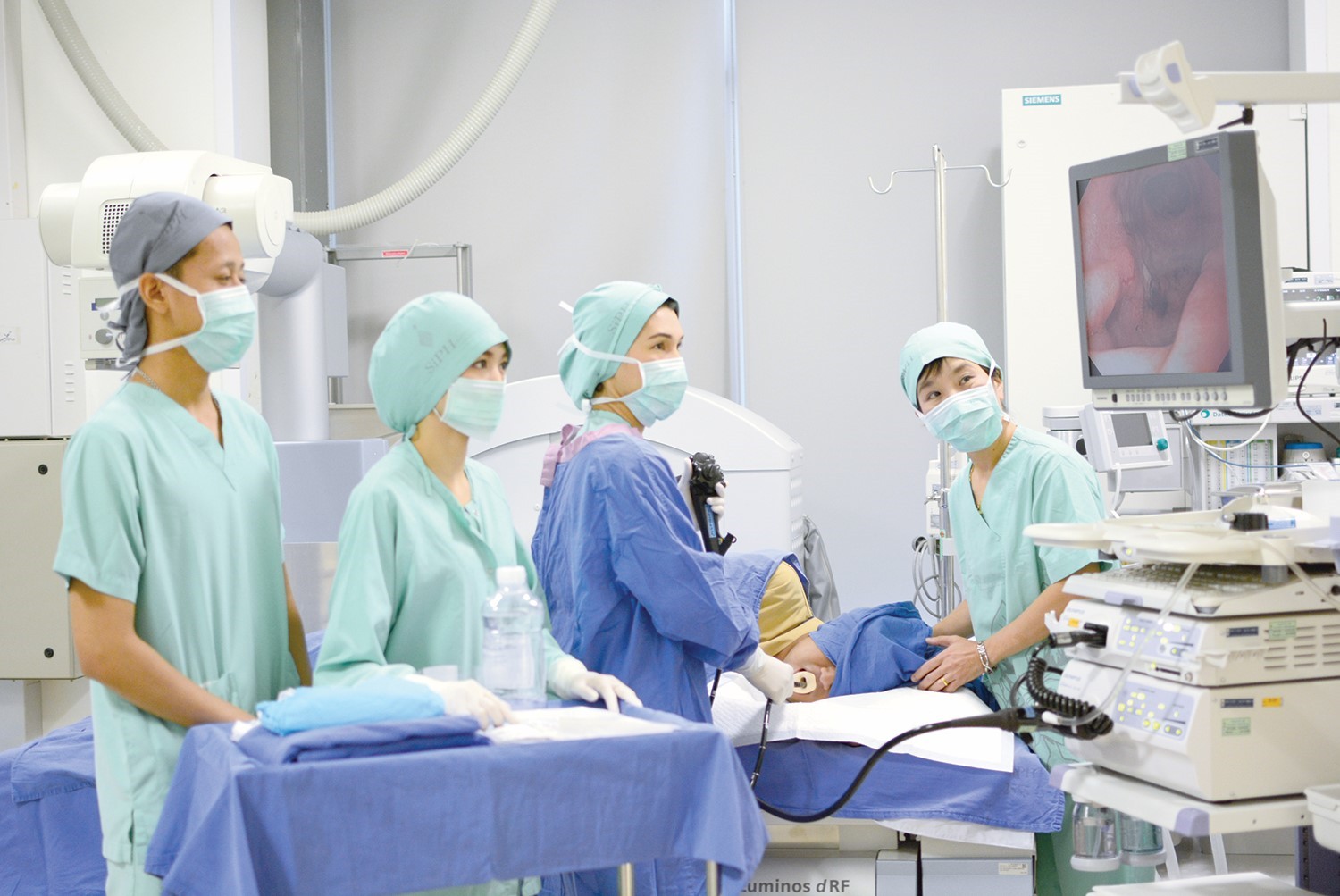 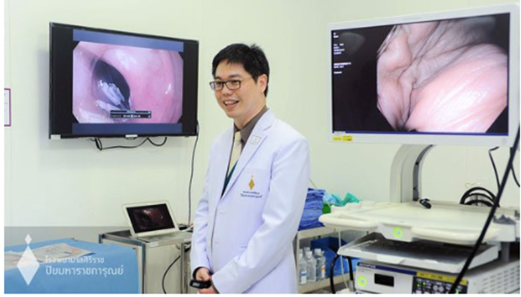 |
  | The SiGHT by SiPH BEYOND LASIK The SiGHT by SiPH WHERE INNOVATION MEETS EXCELLENCE “The SiGHT by SiPH” Vision Correction and Treatment Center, featuring “ReLEx Pro” technology, a German innovation that corrects myopia (nearsightedness) and astigmatism without a blade. It is fast, precise, and gentle, with a small incision and quick recovery, under the care of the hospital's ophthalmologists and specialist personnel. Femto LASIK
|
Respiratory Medicine Center AI X-ray Detection Inspectra CXR An artificial intelligence (AI) system developed to read medical images and generate medical reports for diagnosing abnormalities in Chest X-ray images, serving patients at Siriraj Hospital, Siriraj Piyamaharajkarun Hospital, and the Kanchanapisek Medical Center, as well as other hospitals, at a lower price. It helps reduce hospital budgets in Thailand compared with purchasing AI software from abroad. In the future, there are plans to conduct research and development to create further AI for use in hospitals, leading to appropriate and effective medical use. | 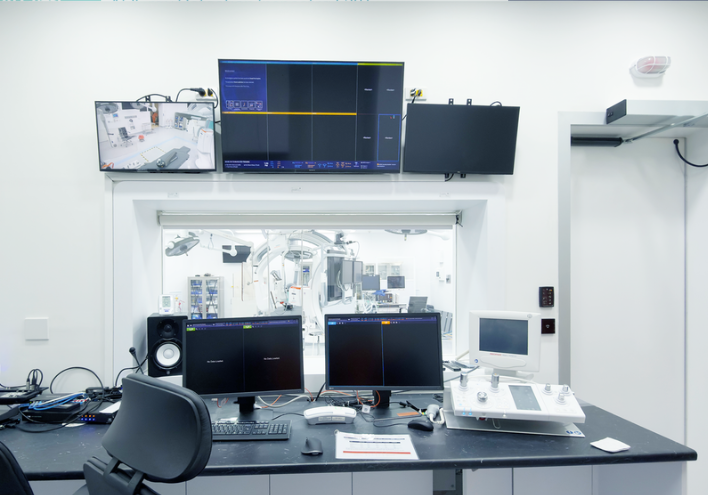
|
G3: Good Corporate Governance
|  |
Siriraj Piyamaharajkarun Hospital places importance on good corporate governance, a cornerstone of sustainable operations, managing the organization on the principles of good governance, transparency, accountability, fairness, and auditability, together with compliance with applicable laws, regulations, requirements, and standards, in order to build confidence among patients, service users, personnel, business partners, and stakeholders in all sectors.
The hospital has appropriately defined the structure, roles, duties, and responsibilities of the units and persons involved, with processes to oversee, monitor, and audit operations so that management is efficient and consistent with organizational goals. It emphasizes risk management, internal control, the prevention of fraud and misconduct, and secure information management with the protection of personal data.
In addition, the hospital promotes an organizational culture grounded in ethics and accountability, supporting personnel to perform their duties with honesty and integrity, to respect the rights of patients and service users, and to operate with the interests of stakeholders in mind. It also provides opportunities for communication, feedback, and reporting of complaints or concerns through appropriate channels, so that this information can be used to continually improve operations and develop the organization.
Good corporate governance is therefore a key mechanism for building credibility and trust, and for enabling the hospital to carry out its medical care mission, quality improvement, and creation of social and environmental value effectively, transparently, and sustainably in the long term.
◆ Principles of Good Corporate Governance
01
Structure and Governance
Clearly defines the roles, duties, authority, and responsibilities of the Board and executives.
02
Ethics and Code of Conduct
Promotes work performed with integrity and ethics, and avoids conflicts of interest.
03
Risk Management and Internal Control
Identifies, assesses, and manages risks that may affect the organization's operations and sustainability.
04
Anti-Corruption and Anti-Misconduct
Has measures to prevent, investigate, and appropriately handle complaints or allegations of corruption.
05
Transparency and Stakeholder Engagement
Appropriately discloses material information, provides channels for feedback and complaints, and uses suggestions to improve operations.
06
Data Protection and Information Security
Safeguards patient data, personnel data, and critical organizational information so that it is secure and compliant with relevant laws and standards.
G4: Cybersecurity and Data Protection
|  |
Information and information system security. Because the medical data and personal data of patients, personnel, and stakeholders are critical information that must be appropriately safeguarded, the hospital is committed to developing an effective information security management system consistent with applicable laws, requirements, and standards, to prevent unauthorized access, use, disclosure, alteration, or loss of data.
The hospital protects personal data and medical data to keep them secure, reduces risks from cyber threats, and maintains the continuity of the information systems that support medical services, operating in compliance with relevant laws and information security standards.
◆ Cybersecurity and Data Protection
The operations of Siriraj Piyamaharajkarun Hospital cover cyber risk prevention and management, data access control, information system security, data backup and recovery, security monitoring and incident response, and raising personnel awareness of cybersecurity and personal data protection, so that every level takes part in preventing risks from cyber threats.
In addition, the hospital places importance on personal data protection, setting guidelines for collecting, using, disclosing, and retaining data in line with its purposes and relevant requirements, promoting the confidentiality of patient data and critical organizational information, and continuously monitoring, reviewing, and improving security measures so as to cope with constantly changing cyber risks and threats.
Cybersecurity and data protection management is therefore an important part of building confidence among patients and service users, supports the continuity and reliability of medical service systems, and is a key element of sustainable hospital operations.
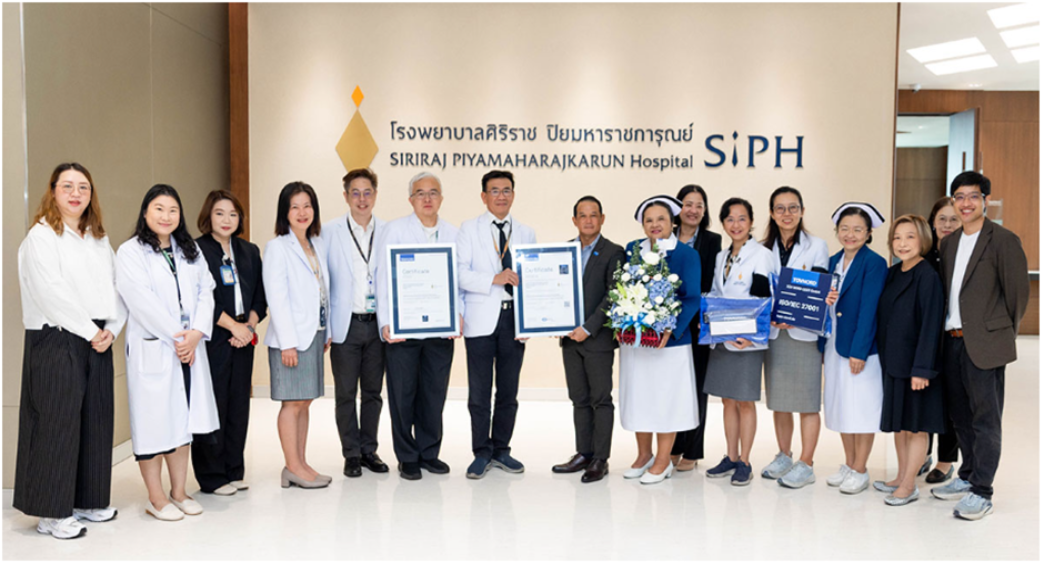
Information Security Management
ISO/IEC 27001:2022

Information Security Standard for Health Information
ISO/IEC 27799:2016

G1: Patient Safety and Service Quality
| |
Patient safety and service quality reflect the hospital's commitment to continually improving the quality of its health and medical services effectively, and demonstrate comprehensive management of service-user safety at every step. The hospital undergoes assessment of its medical service quality at the international level.
Joint Commission International (JCI)
The hospital places importance on raising the quality and safety of medical services in line with international standards and is accredited by Joint Commission International (JCI), a healthcare quality accreditation standard that focuses on developing health service systems that are high-quality, efficient, and above all committed to Patient Safety. JCI accreditation reflects that the hospital has systematic patient care systems and processes, from assessment and treatment planning, accurate patient identification, and medication management, to infection prevention and control, communication and hand-off of medical information, and risk and adverse-event management, with continuous monitoring and process improvement.
In addition, the JCI standards emphasize the involvement of personnel at every level in building a safety culture, the use of data and evidence in quality improvement, and the management of the organization and the support systems related to patient care, so that service users receive standards-based care, risk in service processes is reduced, and quality and patient safety outcomes continually improve.
JCI accreditation is therefore part of demonstrating the hospital's commitment to maintaining international-level standards of medical service quality, alongside the continuous development of patient safety systems and improvement of service quality.
CCPC : Clinical Care Program Certification
The hospital is certified under the Clinical Care Program Certification (CCPC), which focuses on systematically and continuously raising the standard of care processes for designated disease groups or health conditions, covering assessment, diagnosis, treatment, continuing care, and monitoring of clinical outcomes. It emphasizes multidisciplinary teamwork, risk management, and continuous quality improvement, so that patients receive high-quality, safe care in line with international standards.
CCPC Knee Replacement Program Accreditation
1st : Accreditation Knee replacement program (2014 - 2017)
2nd : Re-accreditation Knee replacement program (2018 - 2021)
3rd : Re-accreditation Knee replacement program (2021 - 2024)
4th : Re-accreditation Knee replacement program (2024 - 2027)
CCPC Hip Replacement Program Accreditation
1st : Accreditation Hip replacement program (2021 - 2024)
2nd : Re-accreditation Hip replacement program (2024 - 2027)
G2: Innovation for Sustainable Healthcare Services
| |
Promotes and develops innovation to raise the quality and efficiency of medical services, applying knowledge, technology, and creative ideas to the development of medical service processes and hospital management, in order to raise the quality and safety of service users and improve operating efficiency.
Siriraj Piyamaharajkarun Hospital (SiPH) combines the strengths of the medical knowledge and expertise of the Faculty of Medicine Siriraj Hospital, Mahidol University, with modern services covering health promotion, disease screening, and diagnosis through to the treatment of complex specialty conditions.
SiPH places importance on promoting and developing innovation for sustainable healthcare services, applying knowledge, technology, and creative ideas to the development of medical service processes and hospital management, in order to raise the quality and safety of service users and improve operating efficiency.
◆ Medical Innovation
| Radiation Therapy Clinic “Rapid Arc” Linear Accelerator, Precise and Targeted Radiation An innovation in cancer treatment that is more precise, takes less time than before, and carries fewer side effects. The Rapid Arc linear accelerator is another piece of medical equipment that reflects the readiness and commitment of Siriraj Piyamaharajkarun Hospital to rise to excellence in effective, internationally recognized medical services and to remain at the forefront of technology, for the quality of life and good health of every patient. “Cancer” remains a disease that many people fear when they hear the word, but today that belief needs to be revised. Medical science has advanced greatly, enabling us to find ever better tools and methods for dealing with malignant cancer. The Radiation Oncology Center at Siriraj Piyamaharajkarun Hospital (located on basement level B2) is another source of pride for the hospital, with its state-of-the-art treatment equipment known as the “Rapid Arc” linear accelerator, the first of its kind at the Faculty of Medicine Siriraj Hospital. |
Cancer Center Precision Medicine: A New Dimension in Personalized Cancer Treatment Personalized cancer treatment with Precision Medicine is a new innovation that combines advances in genetics and diagnostic technology to deliver targeted, effective treatment, reduce side effects, and improve patients' chances of recovery. |
|
3 Approaches to Applying Precision Medicine in Cancer Treatment at Siriraj Piyamaharajkarun Hospital
01
Detailed Genetic Analysis
Using advanced technology to analyze the genes involved in the development and spread of cancer.
02
Targeted Drug Selection
Once gene or protein abnormalities are identified, physicians can select drugs specific to that cancer type, reducing reliance on one-size-fits-all chemotherapy.
03
Personalized Treatment Design
A multidisciplinary team works together to develop a personalized treatment plan that may improve the chances of success. Choosing medications that target the underlying mechanisms of the disease, including molecularly targeted therapies, can help control or eliminate cancer cells more effectively.
| Urology Center Robotic-Assisted Surgery: Technology for Prostate Cancer Treatment Surgery using the robotic arms known as the da Vinci system (Robotic-Assisted da Vinci surgery) applies robotic technology to assist surgery under the physician's control. Robotic-assisted surgery is a treatment method that has evolved from laparoscopic (keyhole) surgery: the surgeon controls every movement and the robot is merely an “assistant”, making surgery more convenient and enabling physicians to operate in complex and hard-to-reach areas. This means less pain for patients, very few side effects or complications, and a lower risk of post-operative erectile dysfunction MRI/Ultrasound Fusion Biopsy for Prostate Cancer MRI/Ultrasound Fusion Biopsy combines real-time 3D MRI imaging with ultrasound guidance to precisely identify and target suspicious prostate lesions. This allows biopsies to be taken from specific areas of concern rather than random sampling, enabling earlier and more accurate diagnosis of prostate cancer while reducing procedural complications |
Gastrointestinal and Liver Center Equipped with modern technology for diagnosis and treatment, including endoscopic treatment and surgery. Patients are under the close care of a medical team and personnel with specialized training, to enhance safety, reduce complications, and support faster recovery. Innovation ERCP (Endoscopic Retrograde Cholangipancretography) : An endoscopic examination of the bile and pancreatic ducts, in which an endoscope is passed through the mouth into the duodenum and dye is injected into the bile or pancreatic duct to detect abnormalities. Treatment can be performed at the same time, for example placing a biliary drainage stent when the bile duct is blocked, or removing stones from the bile duct. | |
| The SiGHT by SiPH BEYOND LASIK The SiGHT by SiPH WHERE INNOVATION MEETS EXCELLENCE “The SiGHT by SiPH” Vision Correction and Treatment Center, featuring “ReLEx Pro” technology, a German innovation that corrects myopia (nearsightedness) and astigmatism without a blade. It is fast, precise, and gentle, with a small incision and quick recovery, under the care of the hospital's ophthalmologists and specialist personnel. Femto LASIK
|
Respiratory Medicine Center AI X-ray Detection Inspectra CXR An artificial intelligence (AI) system developed to read medical images and generate medical reports for diagnosing abnormalities in Chest X-ray images, serving patients at Siriraj Hospital, Siriraj Piyamaharajkarun Hospital, and the Kanchanapisek Medical Center, as well as other hospitals, at a lower price. It helps reduce hospital budgets in Thailand compared with purchasing AI software from abroad. In the future, there are plans to conduct research and development to create further AI for use in hospitals, leading to appropriate and effective medical use. |
|
G3: Good Corporate Governance
| |
Siriraj Piyamaharajkarun Hospital places importance on good corporate governance, a cornerstone of sustainable operations, managing the organization on the principles of good governance, transparency, accountability, fairness, and auditability, together with compliance with applicable laws, regulations, requirements, and standards, in order to build confidence among patients, service users, personnel, business partners, and stakeholders in all sectors.
The hospital has appropriately defined the structure, roles, duties, and responsibilities of the units and persons involved, with processes to oversee, monitor, and audit operations so that management is efficient and consistent with organizational goals. It emphasizes risk management, internal control, the prevention of fraud and misconduct, and secure information management with the protection of personal data.
In addition, the hospital promotes an organizational culture grounded in ethics and accountability, supporting personnel to perform their duties with honesty and integrity, to respect the rights of patients and service users, and to operate with the interests of stakeholders in mind. It also provides opportunities for communication, feedback, and reporting of complaints or concerns through appropriate channels, so that this information can be used to continually improve operations and develop the organization.
Good corporate governance is therefore a key mechanism for building credibility and trust, and for enabling the hospital to carry out its medical care mission, quality improvement, and creation of social and environmental value effectively, transparently, and sustainably in the long term.
◆ Principles of Good Corporate Governance
01
Structure and Governance
Clearly defines the roles, duties, authority, and responsibilities of the Board and executives.
02
Ethics and Code of Conduct
Promotes work performed with integrity and ethics, and avoids conflicts of interest.
03
Risk Management and Internal Control
Identifies, assesses, and manages risks that may affect the organization's operations and sustainability.
04
Anti-Corruption and Anti-Misconduct
Has measures to prevent, investigate, and appropriately handle complaints or allegations of corruption.
05
Transparency and Stakeholder Engagement
Appropriately discloses material information, provides channels for feedback and complaints, and uses suggestions to improve operations.
06
Data Protection and Information Security
Safeguards patient data, personnel data, and critical organizational information so that it is secure and compliant with relevant laws and standards.
G4: Cybersecurity and Data Protection
| |
Information and information system security. Because the medical data and personal data of patients, personnel, and stakeholders are critical information that must be appropriately safeguarded, the hospital is committed to developing an effective information security management system consistent with applicable laws, requirements, and standards, to prevent unauthorized access, use, disclosure, alteration, or loss of data.
The hospital protects personal data and medical data to keep them secure, reduces risks from cyber threats, and maintains the continuity of the information systems that support medical services, operating in compliance with relevant laws and information security standards.
◆ Cybersecurity and Data Protection
The operations of Siriraj Piyamaharajkarun Hospital cover cyber risk prevention and management, data access control, information system security, data backup and recovery, security monitoring and incident response, and raising personnel awareness of cybersecurity and personal data protection, so that every level takes part in preventing risks from cyber threats.
In addition, the hospital places importance on personal data protection, setting guidelines for collecting, using, disclosing, and retaining data in line with its purposes and relevant requirements, promoting the confidentiality of patient data and critical organizational information, and continuously monitoring, reviewing, and improving security measures so as to cope with constantly changing cyber risks and threats.
Cybersecurity and data protection management is therefore an important part of building confidence among patients and service users, supports the continuity and reliability of medical service systems, and is a key element of sustainable hospital operations.
Information Security Management
ISO/IEC 27001:2022
Information Security Standard for Health Information
ISO/IEC 27799:2016