
01 April 2026





S - Social
S1: Responsibility to Patients
|  |
Provides medical services that are high-quality, safe, and standards-compliant, with the needs of patients and service users at the center. The hospital places importance on comprehensive patient care throughout the treatment journey, from access to services, diagnosis, treatment and nursing care, and the provision of information, to follow-up of treatment outcomes and continuing care after service.
Siriraj Piyamaharajkarun Hospital places importance on caring for patients and service users, putting service users at the center and continually improving service quality, in terms of the quality and safety of medical care, ease of access to services, information and communication, and courteous service that is responsive to service users' needs.
The hospital listens to the opinions, needs, and experiences of patients and service users through various channels, including service-user satisfaction surveys. The information gathered is analyzed and used to inform improvements to service processes in various areas, so that development concretely aligns with service users' expectations and experiences.
Satisfaction survey results are therefore among the key indicators reflecting the quality and effectiveness of services, as well as the hospital's ability to respond to the needs of patients and customers. The hospital applies assessment results and feedback to define service improvement approaches, follow up on outcomes, and continually improve quality, in order to create a positive experience and build confidence among service users.
S2: Respect for Human Rights
|  |
Siriraj Piyamaharajkarun Hospital places importance on respecting human rights and the dignity of all stakeholder groups, upholding the principles of equality, fairness, and non-discrimination in its operations and medical services, while fostering an environment that respects rights and gives everyone the opportunity to be treated appropriately and equally.
The hospital operates on the principle of respecting the rights and human dignity of patients, service users, and personnel, and promotes equal and non-discriminatory treatment. Human rights and ethics guidelines are communicated to personnel, and channels are provided for hearing complaints and concerns so that the issues raised can be considered and operations improved appropriately.
◆ Human Rights Policy
Siriraj Piyamaharajkarun Hospital places importance on respecting human rights and the dignity of all stakeholder groups, upholding the principles of equality, fairness, and non-discrimination in its operations and medical services, while fostering an environment that respects rights and gives everyone the opportunity to be treated appropriately and equally.
The hospital places importance on respecting the rights and dignity of patients and service users, including their right to adequate and appropriate information, to participate in decisions about their treatment, to confidentiality and privacy, and to receive high-quality, safe medical services without discrimination. Operations take into account the differences and needs of each individual service user.
With respect to personnel, the hospital strives to create a working environment that respects the rights, equality, and dignity of every individual, without discrimination based on individual differences. It promotes respectful treatment among colleagues and places importance on a working environment that is appropriate, safe, and conducive to effective work.
In addition, the hospital places importance on preventing harassment, abuse, and discrimination in the workplace and encourages personnel to raise concerns or complaints through appropriate channels. Information and complaints are handled appropriately with due regard to confidentiality, to build confidence that human rights issues will be heard and considered fairly.
Respect for human rights is therefore an integral part of the hospital's responsible operations and an important foundation for building trust among patients, personnel, and stakeholders. It supports the development of an organization with a lasting culture of respect, equality, and fairness, in line with the Universal Declaration of Human Rights.
S3: Responsibility to Community and Society
|  |
Promotes public participation in health care through health promotion activities, health education, disease prevention, and awareness-raising about factors affecting health, so that people can look after their own health appropriately and gain knowledge they can apply in daily life.
Conducts community and social activities on an ongoing basis, with a focus on health promotion, health education and awareness, support for social causes, and encouraging personnel to contribute to the community. Results are monitored, and feedback from participants is used to improve operations so that they better respond to community needs.
◆ Public Health Education Activities
Siriraj Piyamaharajkarun Hospital places importance on creating value and taking responsibility for the community and society, and seeks to share the health knowledge and expertise of its medical personnel with the public and communities, so that people gain knowledge and understanding and can look after the health of themselves and their families appropriately.
The hospital conducts health education activities for the community on an ongoing basis, selecting health topics that suit the needs and context of the public, such as health promotion and disease prevention, everyday health care, basic first aid, elderly care, and awareness of health risk factors. Communication emphasizes easy-to-understand information that can be applied in practice.
These activities promote Health Promotion and Disease Prevention alongside medical treatment services, giving the public access to health knowledge and encouraging participation in caring for their own health, which helps build communities with lasting health knowledge and capability.
Activity Highlights
 |
Health Education Activities
Super Strong Event The event features activities and panel discussions where medical specialists share their expertise on joint health. |
Health Education Activities
Heart Wow Event World Heart Day The event featured an educational session with heart specialists, “Heart Talk: Heart Valve Treatment Options,” along with fun booths for attendees to enjoy. | 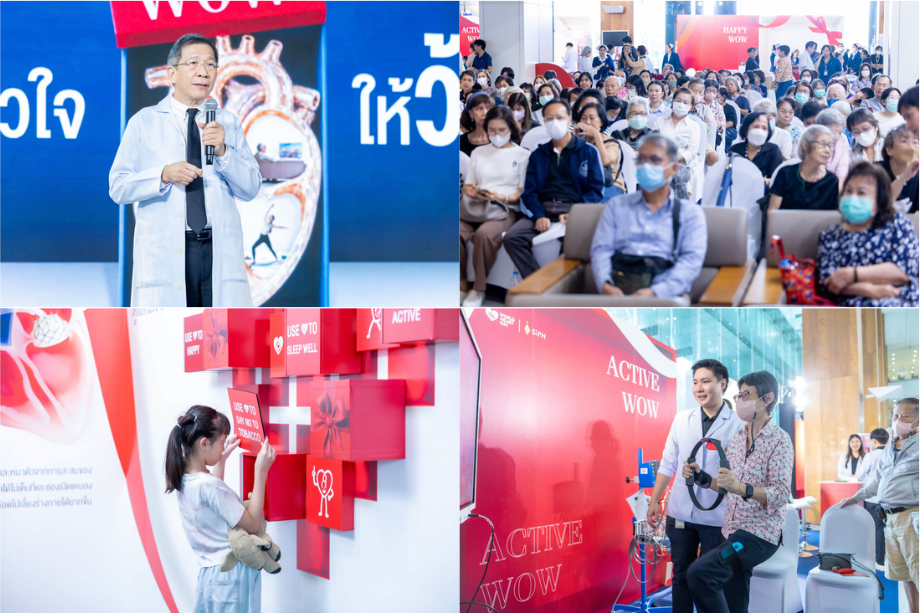 |
 |
Health Education Activities
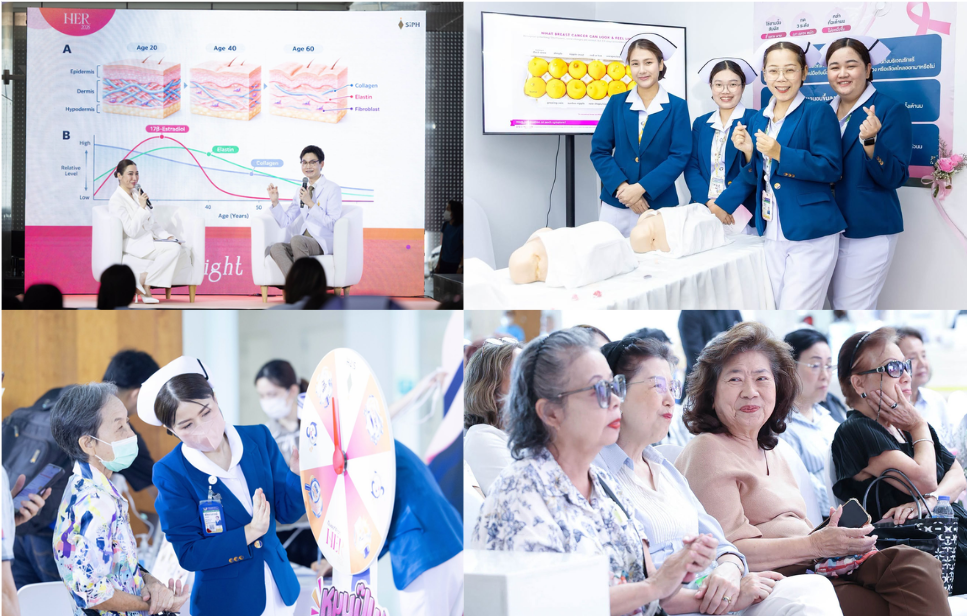
Her 2026 Event The event encouraged women to prioritize their health and explore important health issues with medical specialists. |
SiPH CSR
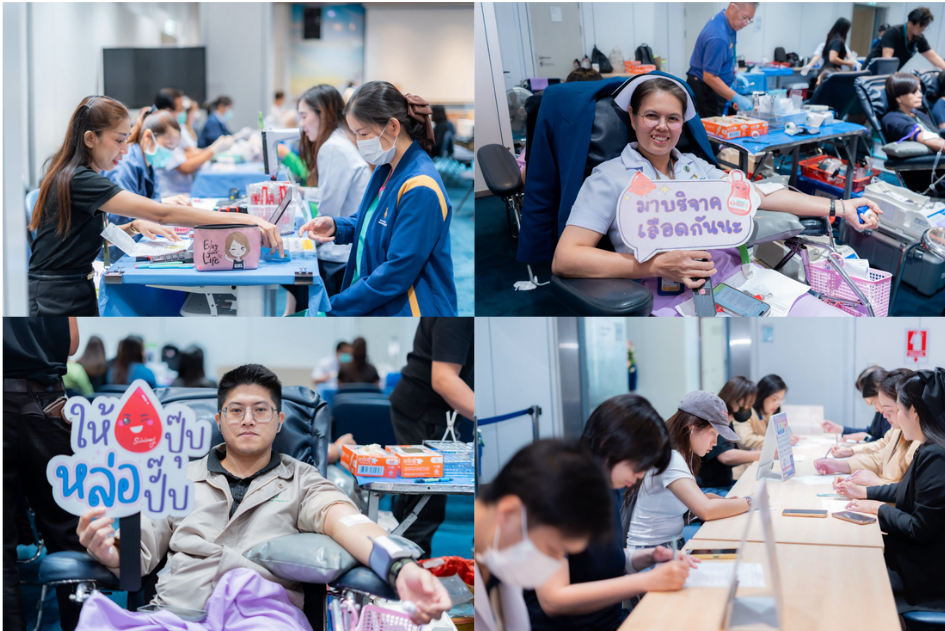
Blood Donation
|  |
S4: Workforce Health and Safety
|  |
The safety and quality of life of personnel are key factors in delivering high-quality and safe medical services. The hospital therefore seeks to create a safe, suitable working environment conducive to performance, while encouraging personnel to build knowledge and awareness and to protect themselves from risks that may arise from their work.
The hospital assesses and manages occupational health and safety risks related to the nature of personnel's work. It promotes personnel well-being by supporting health check-ups, health surveillance based on occupational risk factors, vaccination and appropriate disease prevention, and health and safety education, so that personnel can look after their own health and protect themselves from work-related risks appropriately.
◆ Workforce Health and Safety
Siriraj Piyamaharajkarun Hospital has established an occupational health and safety management system and guidelines for all employees in accordance with Joint Commission International (JCI) standards, with reference to relevant occupational health legal requirements. It has also adopted policies on safety, occupational health, and the working environment so that employees' work complies with the relevant standards and legal requirements on safety, occupational health, and the working environment.
The hospital inspects the safety of its physical facilities, and inspection results are reviewed and addressed through a comprehensive facility-wide risk assessment. The hospital sets targets, implements improvements, and monitors data to ensure that safety risks related to workplace violence are reduced or eliminated.
The Environment and Sustainable Growth Committee has authority over the hospital's safety management. It defines the authority and responsibilities of team members and sets the policies, plans, practices, monitoring, maintenance, evaluation, and review of safety management policy. The Safety, Occupational Health and Environment Unit reports on, investigates, and analyzes the causes of workplace violence incidents, defines preventive and corrective measures, and tracks the results of corrective actions. In the event of an accident involving personnel, the incident is reported through the Occurrence Report system; a designated responsible representative investigates, analyzes root causes, defines preventive and corrective measures, and follows up on the results. The Safety, Occupational Health and Environment Unit uses accident analysis to examine patterns, trends, and the likelihood of occurrence in order to control and prevent recurrence.
These measures reduce the risk of workplace accidents and create a good and safe working environment. The hospital carries out occupational health and safety work on an ongoing basis, covering the assessment and control of occupational risks; health check-ups and health surveillance of personnel according to risk factors; the promotion of disease prevention and appropriate vaccination; safety training and awareness-raising; and the monitoring and analysis of work-related incidents, so that the resulting information can inform preventive measures and the continuous improvement of the working environment.
◆ Occupational Health and Safety Programs
The hospital places importance on preparedness for emergencies, disasters, and situations that could affect the safety of patients, service users, and personnel and the continuity of medical services. It carries out risk assessments, prepares emergency response plans, and conducts regular plan drills so that personnel have the knowledge and understanding to perform their duties correctly and systematically in real events.
Drills cover significant emergency scenarios relevant to the hospital's context, such as fire prevention, suppression, and evacuation drills; emergency and disaster response drills; and plans for flooding, public disasters, utility failures, and other situations that could affect medical services. The roles, duties, and responsibilities of the units involved are clearly defined, including coordination with relevant internal and external agencies.
Fire Emergency Response Drill Program
Fire safety training and firefighting drills build the knowledge and skills needed to respond to fire emergencies. A fire evacuation drill is held once a year, and fire emergency response training covers all employees, so that they can follow safety standards effectively and reduce fire risk in the healthcare facility. The program also supports the development of a risk assessment plan for improving the structures and utilities essential to safety.
Other Emergency Response Drill Program
The hospital places importance on being prepared for emergencies that may occur within the hospital, so that employees can respond to various events effectively, quickly, and safely. Emergency response training is therefore provided for a range of scenarios, including:
• Suspicious object found
• Child abduction
• Service user accident
• Flooding
• Gas leak
• Mass casualty incident
• Computer system failure
S1: Responsibility to Patients
| |
Provides medical services that are high-quality, safe, and standards-compliant, with the needs of patients and service users at the center. The hospital places importance on comprehensive patient care throughout the treatment journey, from access to services, diagnosis, treatment and nursing care, and the provision of information, to follow-up of treatment outcomes and continuing care after service.
Siriraj Piyamaharajkarun Hospital places importance on caring for patients and service users, putting service users at the center and continually improving service quality, in terms of the quality and safety of medical care, ease of access to services, information and communication, and courteous service that is responsive to service users' needs.
The hospital listens to the opinions, needs, and experiences of patients and service users through various channels, including service-user satisfaction surveys. The information gathered is analyzed and used to inform improvements to service processes in various areas, so that development concretely aligns with service users' expectations and experiences.
Satisfaction survey results are therefore among the key indicators reflecting the quality and effectiveness of services, as well as the hospital's ability to respond to the needs of patients and customers. The hospital applies assessment results and feedback to define service improvement approaches, follow up on outcomes, and continually improve quality, in order to create a positive experience and build confidence among service users.
S2: Respect for Human Rights
| |
Siriraj Piyamaharajkarun Hospital places importance on respecting human rights and the dignity of all stakeholder groups, upholding the principles of equality, fairness, and non-discrimination in its operations and medical services, while fostering an environment that respects rights and gives everyone the opportunity to be treated appropriately and equally.
The hospital operates on the principle of respecting the rights and human dignity of patients, service users, and personnel, and promotes equal and non-discriminatory treatment. Human rights and ethics guidelines are communicated to personnel, and channels are provided for hearing complaints and concerns so that the issues raised can be considered and operations improved appropriately.
◆ Human Rights Policy
Siriraj Piyamaharajkarun Hospital places importance on respecting human rights and the dignity of all stakeholder groups, upholding the principles of equality, fairness, and non-discrimination in its operations and medical services, while fostering an environment that respects rights and gives everyone the opportunity to be treated appropriately and equally.
The hospital places importance on respecting the rights and dignity of patients and service users, including their right to adequate and appropriate information, to participate in decisions about their treatment, to confidentiality and privacy, and to receive high-quality, safe medical services without discrimination. Operations take into account the differences and needs of each individual service user.
With respect to personnel, the hospital strives to create a working environment that respects the rights, equality, and dignity of every individual, without discrimination based on individual differences. It promotes respectful treatment among colleagues and places importance on a working environment that is appropriate, safe, and conducive to effective work.
In addition, the hospital places importance on preventing harassment, abuse, and discrimination in the workplace and encourages personnel to raise concerns or complaints through appropriate channels. Information and complaints are handled appropriately with due regard to confidentiality, to build confidence that human rights issues will be heard and considered fairly.
Respect for human rights is therefore an integral part of the hospital's responsible operations and an important foundation for building trust among patients, personnel, and stakeholders. It supports the development of an organization with a lasting culture of respect, equality, and fairness, in line with the Universal Declaration of Human Rights.
S3: Responsibility to Community and Society
| |
Promotes public participation in health care through health promotion activities, health education, disease prevention, and awareness-raising about factors affecting health, so that people can look after their own health appropriately and gain knowledge they can apply in daily life.
Conducts community and social activities on an ongoing basis, with a focus on health promotion, health education and awareness, support for social causes, and encouraging personnel to contribute to the community. Results are monitored, and feedback from participants is used to improve operations so that they better respond to community needs.
◆ Public Health Education Activities
Siriraj Piyamaharajkarun Hospital places importance on creating value and taking responsibility for the community and society, and seeks to share the health knowledge and expertise of its medical personnel with the public and communities, so that people gain knowledge and understanding and can look after the health of themselves and their families appropriately.
The hospital conducts health education activities for the community on an ongoing basis, selecting health topics that suit the needs and context of the public, such as health promotion and disease prevention, everyday health care, basic first aid, elderly care, and awareness of health risk factors. Communication emphasizes easy-to-understand information that can be applied in practice.
These activities promote Health Promotion and Disease Prevention alongside medical treatment services, giving the public access to health knowledge and encouraging participation in caring for their own health, which helps build communities with lasting health knowledge and capability.
Activity Highlights
|
Health Education Activities
Super Strong Event The event features activities and panel discussions where medical specialists share their expertise on joint health. |
Health Education Activities
Heart Wow Event World Heart Day The event featured an educational session with heart specialists, “Heart Talk: Heart Valve Treatment Options,” along with fun booths for attendees to enjoy. | |
|
Health Education Activities
Her 2026 Event The event encouraged women to prioritize their health and explore important health issues with medical specialists. |
SiPH CSR
Blood Donation
| |
S4: Workforce Health and Safety
| |
The safety and quality of life of personnel are key factors in delivering high-quality and safe medical services. The hospital therefore seeks to create a safe, suitable working environment conducive to performance, while encouraging personnel to build knowledge and awareness and to protect themselves from risks that may arise from their work.
The hospital assesses and manages occupational health and safety risks related to the nature of personnel's work. It promotes personnel well-being by supporting health check-ups, health surveillance based on occupational risk factors, vaccination and appropriate disease prevention, and health and safety education, so that personnel can look after their own health and protect themselves from work-related risks appropriately.
◆ Workforce Health and Safety
Siriraj Piyamaharajkarun Hospital has established an occupational health and safety management system and guidelines for all employees in accordance with Joint Commission International (JCI) standards, with reference to relevant occupational health legal requirements. It has also adopted policies on safety, occupational health, and the working environment so that employees' work complies with the relevant standards and legal requirements on safety, occupational health, and the working environment.
The hospital inspects the safety of its physical facilities, and inspection results are reviewed and addressed through a comprehensive facility-wide risk assessment. The hospital sets targets, implements improvements, and monitors data to ensure that safety risks related to workplace violence are reduced or eliminated.
The Environment and Sustainable Growth Committee has authority over the hospital's safety management. It defines the authority and responsibilities of team members and sets the policies, plans, practices, monitoring, maintenance, evaluation, and review of safety management policy. The Safety, Occupational Health and Environment Unit reports on, investigates, and analyzes the causes of workplace violence incidents, defines preventive and corrective measures, and tracks the results of corrective actions. In the event of an accident involving personnel, the incident is reported through the Occurrence Report system; a designated responsible representative investigates, analyzes root causes, defines preventive and corrective measures, and follows up on the results. The Safety, Occupational Health and Environment Unit uses accident analysis to examine patterns, trends, and the likelihood of occurrence in order to control and prevent recurrence.
These measures reduce the risk of workplace accidents and create a good and safe working environment. The hospital carries out occupational health and safety work on an ongoing basis, covering the assessment and control of occupational risks; health check-ups and health surveillance of personnel according to risk factors; the promotion of disease prevention and appropriate vaccination; safety training and awareness-raising; and the monitoring and analysis of work-related incidents, so that the resulting information can inform preventive measures and the continuous improvement of the working environment.
◆ Occupational Health and Safety Programs
The hospital places importance on preparedness for emergencies, disasters, and situations that could affect the safety of patients, service users, and personnel and the continuity of medical services. It carries out risk assessments, prepares emergency response plans, and conducts regular plan drills so that personnel have the knowledge and understanding to perform their duties correctly and systematically in real events.
Drills cover significant emergency scenarios relevant to the hospital's context, such as fire prevention, suppression, and evacuation drills; emergency and disaster response drills; and plans for flooding, public disasters, utility failures, and other situations that could affect medical services. The roles, duties, and responsibilities of the units involved are clearly defined, including coordination with relevant internal and external agencies.
Fire Emergency Response Drill Program
Fire safety training and firefighting drills build the knowledge and skills needed to respond to fire emergencies. A fire evacuation drill is held once a year, and fire emergency response training covers all employees, so that they can follow safety standards effectively and reduce fire risk in the healthcare facility. The program also supports the development of a risk assessment plan for improving the structures and utilities essential to safety.
Other Emergency Response Drill Program
The hospital places importance on being prepared for emergencies that may occur within the hospital, so that employees can respond to various events effectively, quickly, and safely. Emergency response training is therefore provided for a range of scenarios, including:
• Suspicious object found
• Child abduction
• Service user accident
• Flooding
• Gas leak
• Mass casualty incident
• Computer system failure